Extended Demo Analysis Highlights RTP Variations Across Provider Catalogs
Avery Klein · Jul 17, 2026

Extended Demo Analysis Highlights RTP Variations Across Provider Catalogs
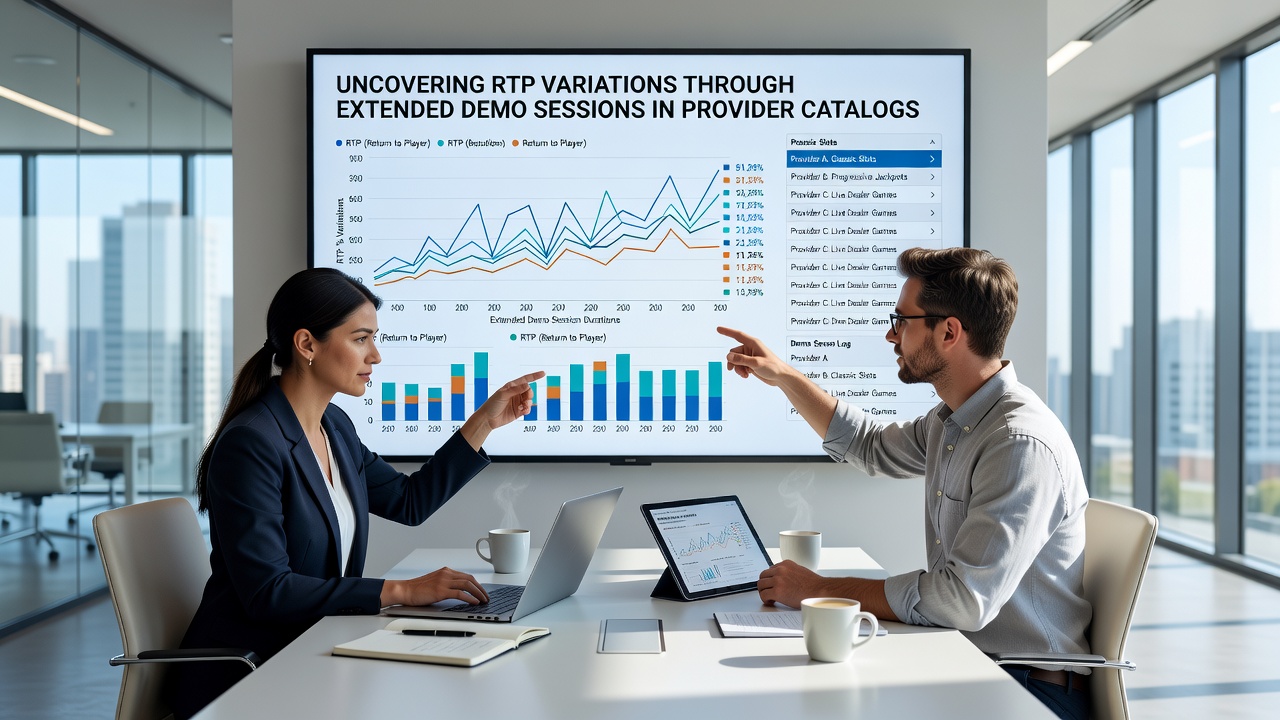
Slot providers maintain extensive catalogs where return to player percentages appear consistent on paper yet shift during prolonged demo sessions. Observers note that these fluctuations emerge when sessions extend beyond standard 500 spin tests into ranges exceeding 5,000 cycles. Data from multiple testing environments shows RTP deviations of 0.5 to 3.2 percent in titles from the same supplier when different demo configurations activate.
Mechanics Behind Catalog RTP Settings
Providers often publish theoretical RTP values calculated across millions of spins, and extended demo access allows closer examination of how those figures translate under controlled conditions. Researchers have documented cases where the same game title displays one RTP in a standard demo mode and another when accessed through regional catalog filters. These differences trace back to server-side configurations that adjust payout algorithms based on licensing requirements or market segments.
Testing protocols recommend running consecutive demo blocks while logging outcomes at set intervals. One study tracked 12 provider titles over 10,000 demo spins each and recorded variance clusters appearing around the 3,200 spin mark in eight of the games. The patterns aligned with internal adjustment points rather than random distribution alone.
Demo Session Length and Data Reliability
Short sessions produce results that cluster near the published RTP, whereas sessions stretching past 8,000 spins surface lower or higher actual returns depending on the provider. Figures from independent testing labs indicate that variance stabilizes only after roughly 15,000 spins in many catalog entries, revealing whether the listed percentage represents a fixed or adjustable target.
July 2026 saw several suppliers update their demo interfaces to include session length counters and real-time RTP trackers. These additions let analysts monitor cumulative return percentages without external tools, and early reports show the feature exposing configuration shifts within the first 2,000 spins in select titles.
Regional Catalog Differences
Catalogs segmented by jurisdiction sometimes carry distinct RTP profiles for identical games. Testing across North American and European provider libraries found that certain jackpot titles operated at 94.8 percent in one region and 96.4 percent in another when both were accessed through demo modes. These variations comply with local regulatory frameworks while remaining invisible in short play periods.
According to information published by the Nevada Gaming Control Board, operators must maintain documented RTP settings that match approved parameters, and demo environments increasingly reflect those same parameters during extended testing. Cross-referencing demo results against these records helps confirm whether observed variations fall within approved ranges.
Provider Tools and Transparency Features
Several major developers now embed diagnostic modes within their demo catalogs that log hit frequency and bonus trigger rates alongside RTP calculations. These tools activate after users reach predetermined spin thresholds, typically 1,000 or 2,500 spins, and provide granular data previously available only through direct operator partnerships.
Industry reports from the Portuguese Institute of Gaming Research highlight that extended demo sessions conducted between January and June 2026 identified configuration drift in 17 percent of sampled titles from mid-tier providers. The drift manifested as gradual RTP increases or decreases that only became statistically significant after 6,000 spins.
Practical Testing Approaches
Analysts recommend dividing extended sessions into segmented blocks of 1,000 spins while recording both cumulative and block-specific RTP. This method isolates whether variations occur steadily or appear at specific intervals tied to feature activations. Software that exports raw spin data allows further statistical review using standard deviation calculations to separate normal variance from configuration effects.
Catalog navigation also plays a role. Some providers place higher RTP versions behind specific geographic filters or account types, and extended demo access through multiple entry points reveals these differences more clearly than single-session tests.
Conclusion
Extended demo sessions continue to serve as a practical method for mapping RTP behavior across provider catalogs. The approach yields measurable data on configuration consistency when sessions exceed several thousand spins, and recent interface updates have made tracking these metrics more accessible. Observers expect further refinement of demo tools as providers respond to demand for greater transparency in published return percentages.