Software Studios Outline Frameworks for Integrating Random Elements with Retention Features in Controlled Reel Markets
Avery Klein · Jul 1, 2026
Software Studios Outline Frameworks for Integrating Random Elements with Retention Features in Controlled Reel Markets
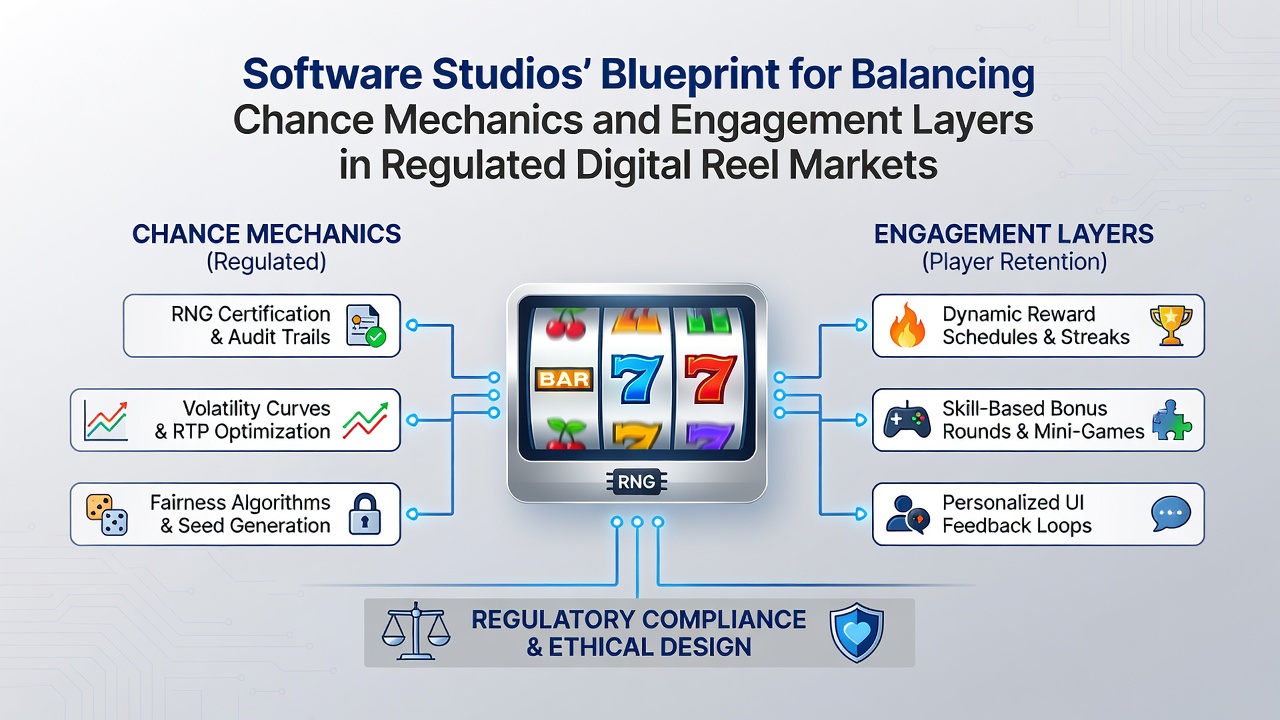
Software studios have developed structured approaches to align random outcome systems with layered player interaction tools across regulated digital reel environments, and these methods draw from compliance requirements that vary by jurisdiction. Data from industry reports indicate that studios prioritize mathematical models where return-to-player percentages remain stable while bonus structures encourage continued sessions without breaching local thresholds. Observers note that this integration occurs through iterative testing cycles that map probability distributions against feature activation rates.
Core Components of Chance Mechanics
Random number generators form the foundation of chance systems in these markets, and studios calibrate them to produce consistent outcome frequencies over millions of spins according to standards set by testing laboratories. Engineers incorporate weighted reel strips that distribute symbols according to predefined probabilities, while volatility indexes help determine how often larger payouts appear relative to smaller ones. Research from academic sources shows that adjustments to these indexes occur during development to match regulatory caps on maximum stakes and session lengths.
Studios also embed audit trails that log every generated outcome for third-party verification, and this practice supports transparency demands from oversight bodies in multiple regions. Figures from the Nevada Gaming Control Board reveal that certified systems undergo monthly statistical reviews to confirm alignment with approved parameters. Those who've examined deployment logs find that even minor firmware updates trigger re-certification processes to maintain integrity.
Engagement Layers and Their Integration
Engagement features such as cascading reels, multiplier trails, and progressive jackpots attach to the core random engine through modular code segments, and developers ensure these additions do not alter the underlying probability calculations. Activation triggers rely on specific symbol combinations that occur at rates calibrated during simulation phases, while session timers and loss limits function as external controls imposed by platform operators. Studies from the University of Sydney's Gambling Research Unit demonstrate that such layers increase average session duration when frequency settings stay within documented ranges.
Teams coordinate these elements so that free-spin rounds or bonus picks activate at intervals that sustain interest yet respect aggregate return caps enforced by local rules. In July 2026, several European platforms reported updates to engagement pacing after new guidelines on spin intervals took effect, and software providers responded by refining trigger thresholds accordingly.

Regulatory Considerations Across Jurisdictions
Compliance frameworks differ between markets, and studios maintain separate configuration profiles for each territory to satisfy stake caps, feature restrictions, and reporting obligations. Australian regulators, for instance, require detailed disclosure of all bonus mechanics prior to release, while Canadian provincial authorities emphasize real-time monitoring of outcome fairness. Those who've reviewed cross-border deployment records observe that unified codebases allow quick toggling of regional parameters without full recompilation.
External audits from organizations like eCOGRA provide independent validation that both chance calculations and engagement sequences meet published standards, and operators rely on these certifications when launching titles in new areas. Data released by the Australian Communications and Media Authority in early 2026 highlighted increased scrutiny on multiplier values within bonus rounds, prompting studios to adjust scaling curves during the design phase.
Testing and Iteration Processes
Development pipelines incorporate extensive simulation runs that model millions of sessions under varied player behaviors, and results feed into adjustments for both random distributions and feature pacing. Quality assurance groups track metrics such as hit frequency, average bonus length, and return variance to identify imbalances before certification submissions. Observers note that iterative loops between mathematical modeling and user-experience testing teams help refine how chance outcomes feed into engagement sequences.
Case examples from major providers show that early prototype reviews often reveal over-activation of certain layers, leading to recalibration of symbol weights or cooldown periods. This process continues through beta deployments where anonymized performance data informs final tweaks.
Conclusion
Software studios maintain documented blueprints that coordinate random mechanics with engagement components while adhering to the distinct rules of each regulated market, and ongoing collaboration with testing bodies and regional authorities supports continued refinement of these systems. Market data from July 2026 onward continues to shape how these frameworks evolve in response to updated compliance expectations.