Synchronization of Animation Layers, Sound Design, and Payout Mechanisms in Mobile Gambling Software
Petra Bennett · Aug 7, 2026

Synchronization of Animation Layers, Sound Design, and Payout Mechanisms in Mobile Gambling Software
Developers integrate multiple animation layers with audio tracks to align visual and auditory feedback precisely with the payout calculations embedded in mobile gambling applications. These systems rely on real-time data from random number generators that determine outcomes before triggering corresponding graphic sequences and sound events.
Core Technical Framework in Portable Platforms
Portable gambling software operates through modular codebases where animation engines handle separate layers for background elements, symbol movements, and win celebrations while sound engines manage layered audio tracks including ambient noise, reel spins, and reward chimes. Data shows that payout structures, defined by return-to-player percentages and volatility indexes, dictate the intensity and duration of these layers so higher payouts activate extended animation cycles and richer soundscapes.
Engineers program event listeners that monitor spin results and instantly route signals to both rendering pipelines and audio synthesizers. According to reports from the Nevada Gaming Control Board, synchronization protocols ensure that animation frames and audio buffers load within milliseconds of outcome confirmation to maintain seamless user experiences across devices.
Animation Layer Triggers and Payout Alignment
Animation layers function as stacked visual components where base reel spins occupy the lowest tier while win multipliers and bonus sequences occupy higher tiers. When a payout calculation exceeds predefined thresholds, the software activates additional layers that overlay particle effects or expanding symbols without disrupting the underlying reel mechanics. Research from gaming technology institutions indicates that this layered approach allows developers to scale visual complexity directly to prize values while preserving frame rates on varied hardware.
Those who analyze code repositories note that conditional statements link payout tables to animation controllers so a standard line win might trigger only symbol highlights whereas a progressive jackpot engages full-screen transitions and particle bursts. These connections rely on timestamped events that keep visual updates synchronized with the mathematical outcome already determined by the game's core algorithm.
Sound Design Integration with Reward Structures
Sound design employs separate audio channels for different payout magnitudes where low-value wins receive short tonal cues and high-value wins incorporate multi-layered compositions with rising pitch and added instrumentation. Mobile applications preload these audio assets and trigger them via the same payout event flags used for animations. Industry data from the Australian Communications and Media Authority reveals that precise audio timing enhances player retention metrics when sounds match the scale of rewards.
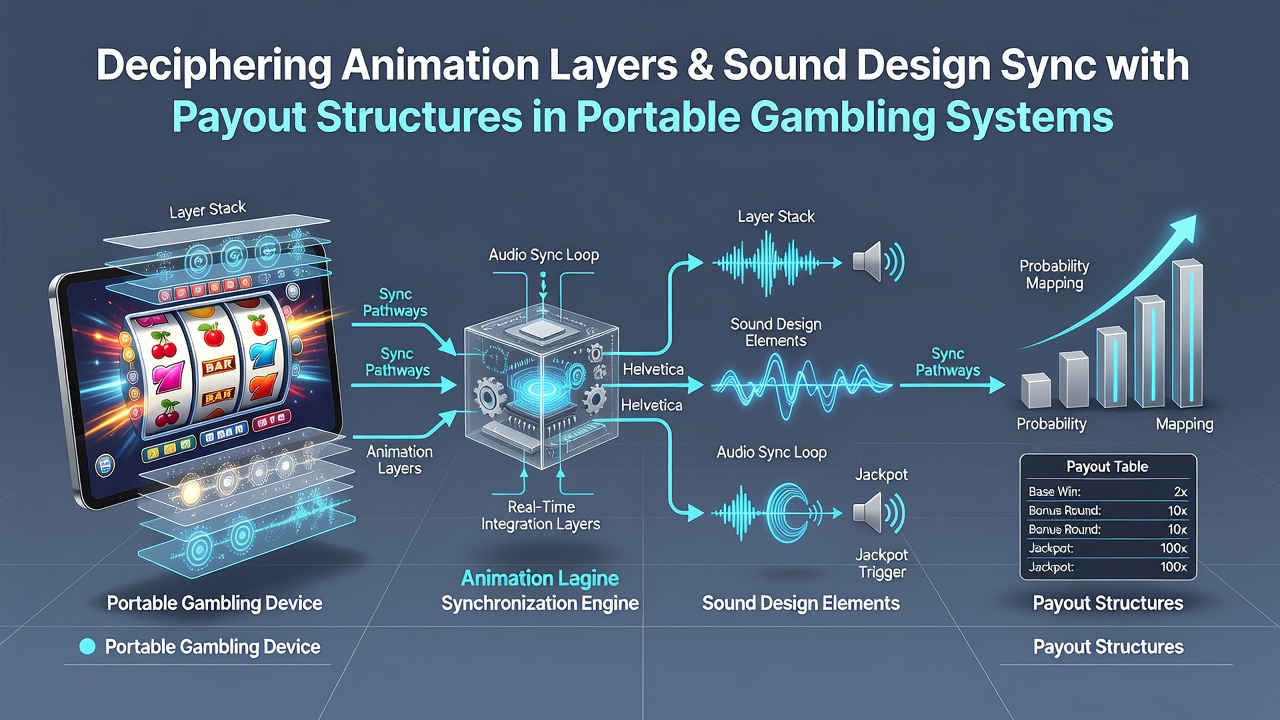
Engineers use middleware tools that map decibel levels and frequency ranges to payout volatility so frequent small wins produce crisp, repetitive audio motifs while rare large wins generate sustained harmonic builds. This mapping occurs through configuration files that reference the same payout matrices governing the mathematical model of each game title.
August 2026 Platform Updates and Compliance
Platform updates scheduled for August 2026 introduce refined synchronization standards that require animation and audio events to complete within tighter latency windows on portable devices. These changes stem from updated technical specifications issued by regulatory bodies in multiple jurisdictions and focus on ensuring that payout feedback remains consistent regardless of network conditions or device performance variations.
Developers test these updates across operating systems to verify that layered animations and sound cues activate in exact sequence with the underlying payout engine. Observers report that compliance testing now includes automated checks for timing drift between visual and auditory components during extended play sessions.
Case Examples from Established Providers
One provider implemented a system where cascading reel animations expand in duration proportionally to cumulative payouts while background music swells through additional instrument tracks. Another case involved a title that reserved distinct sound palettes for different jackpot tiers with each tier tied to specific animation depth layers. These implementations demonstrate how payout structures serve as the central reference point for both visual and audio subsystems.
Technical documentation from development teams shows that shared event buses carry payout values to animation and audio modules simultaneously so both components receive identical trigger data at the same millisecond mark.
Conclusion
The coordination of animation layers and sound design with payout structures in portable gambling software depends on shared data pipelines and event-driven architecture that activate visual and auditory elements according to predefined reward parameters. Updates expected in August 2026 will further standardize these synchronization requirements across the sector.