Volatility Indexes Shaping Bonus Feature Designs in Leading Slot Studios
Avery Klein · Jul 3, 2026
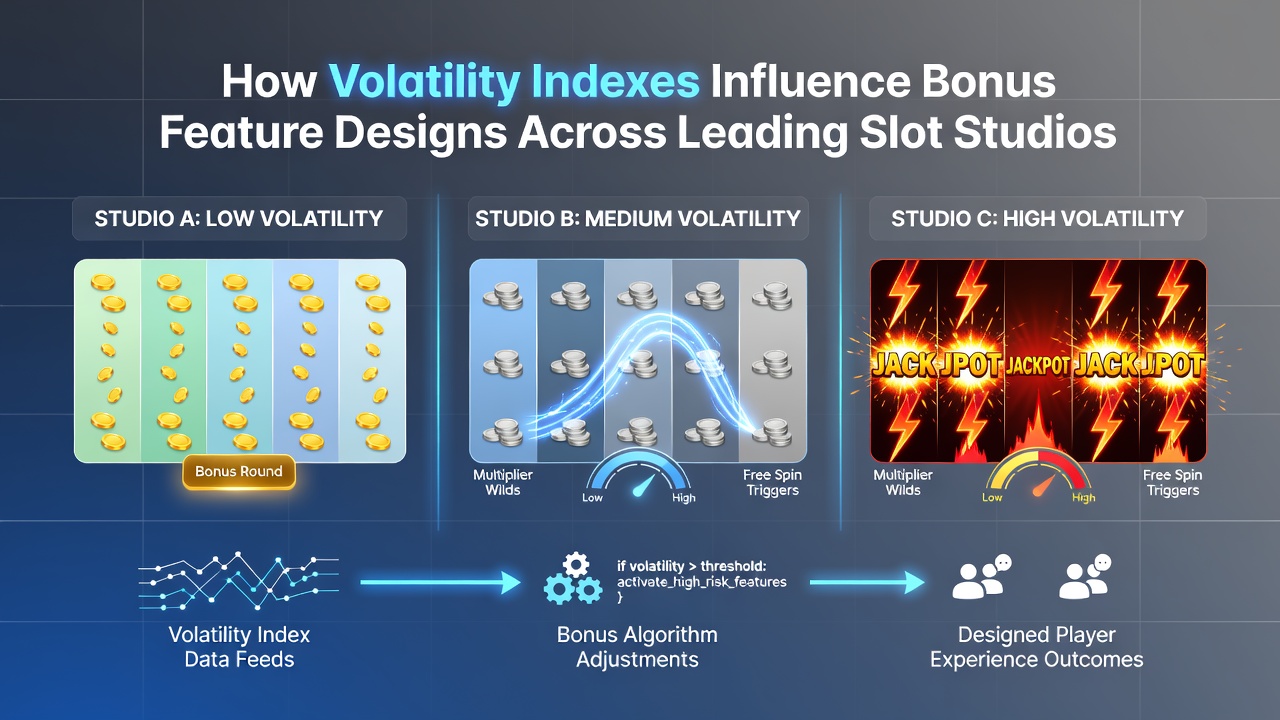
Volatility Indexes Shaping Bonus Feature Designs in Leading Slot Studios
Volatility indexes serve as core measurement tools that slot studios apply when calibrating risk and reward structures in bonus features, and these metrics directly determine how often triggers occur alongside payout magnitudes across various game portfolios. Data from multiple providers indicates that studios track these indexes through proprietary models which factor in hit frequency, average bonus returns, and distribution patterns over thousands of simulated spins. According to figures released by the Nevada Gaming Control Board, operators adjust bonus parameters in high-volatility titles to produce rarer activations that deliver larger multipliers, while low-volatility designs incorporate more frequent smaller rewards to maintain steady engagement levels.
Core Mechanics Behind Volatility Measurement
Leading studios calculate volatility indexes by analyzing historical performance data from live deployments and internal testing environments, then map those results onto bonus round architectures that align with target player retention goals. Researchers at industry analysis firms have documented how a volatility score above 8.0 on standard scales typically leads developers to extend bonus cooldown periods and increase multiplier ceilings, whereas scores below 4.0 prompt additions of mini-games and incremental prize ladders. This calibration process occurs during the final design phase when teams review payout tables and adjust reel weighting to match the intended index.
Studio-Specific Approaches to Bonus Integration
Play'n GO has incorporated volatility data into its bonus trigger systems by requiring higher index values to unlock progressive elements that accumulate across multiple sessions, while NetEnt applies similar metrics to limit free spin quantities in elevated volatility releases. Microgaming studios, meanwhile, utilize index thresholds to determine whether bonus features include retrigger mechanics or fixed round limits, with adjustments made after reviewing aggregated session data. These decisions stem from internal dashboards that correlate volatility readings with metrics such as average bonus duration and return-to-player variance.
One development team at a major European provider adjusted its entire bonus suite after internal simulations revealed that a 1.5-point volatility increase necessitated fewer but more layered bonus stages to preserve mathematical integrity. Such refinements appear consistently across studio pipelines because the index serves as an early filter that dictates feature complexity before full asset production begins.
Regional Regulatory Influences on Design Parameters
Reports compiled by the Australian Communications and Media Authority show that volatility indexes factor into compliance reviews for bonus structures, particularly when operators submit games for certification in markets with strict return-to-player disclosure rules. Studios respond by embedding adjustable parameters that allow operators to fine-tune bonus frequency without altering the underlying index, and this flexibility has become standard in titles released since early 2025. Canadian provincial regulators have similarly referenced volatility metrics in their technical standards documents, prompting developers to document how each bonus round contributes to the overall score.
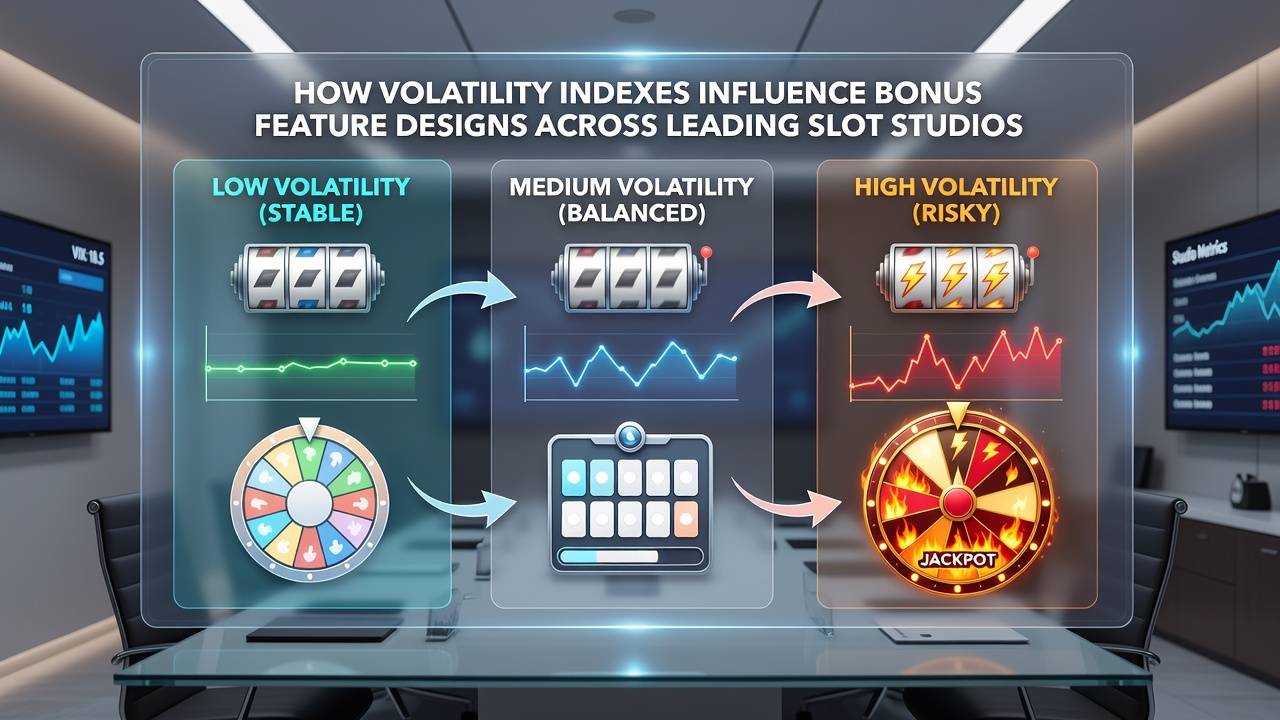
July 2026 brought additional scrutiny as several jurisdictions updated their submission requirements to include volatility index declarations alongside bonus probability tables, and providers responded by publishing supplementary design notes that explain how each feature aligns with the declared score. These updates have encouraged studios to adopt modular bonus engines capable of scaling trigger rates based on operator-selected volatility bands.
Impact on Player Experience and Retention Metrics
Analytics platforms used by operators reveal that games engineered around specific volatility indexes generate distinct session length patterns, with higher-index titles producing shorter but more intense bonus interactions. Studios therefore design bonus visuals and audio cues to match these patterns, incorporating escalating tension elements in high-volatility bonuses while favoring steady progression indicators in lower-index variants. Data compiled through partnership agreements between providers and analytics firms shows measurable differences in repeat play rates when bonus designs adhere closely to index targets.
Take the case of a 2025 release where one studio lowered its volatility index by 0.8 points and subsequently added cascading bonus layers that extended average feature length by 12 seconds per activation. Observers note similar patterns across multiple portfolios where index adjustments precede visible changes to bonus complexity and reward distribution.
Future Trends in Index-Driven Development
Industry organizations such as the European Gaming and Betting Association have begun hosting workshops on volatility modeling techniques that incorporate machine learning to predict how new bonus mechanics will shift overall indexes. These sessions highlight how emerging features like dynamic multiplier pools require studios to recalibrate trigger probabilities more frequently than traditional designs. Providers continue to refine their internal tools so that volatility targets remain consistent even as bonus innovations introduce additional variables into the equation.
Conclusion
Volatility indexes function as foundational design constraints that guide bonus feature architecture across leading slot studios, and the practice has become more formalized through regulatory reporting and internal analytics. As markets evolve through 2026 and beyond, providers maintain these metrics at the center of their development cycles to ensure mathematical consistency while accommodating new feature types. The relationship between index values and bonus parameters continues to shape how studios allocate resources during production and how operators select titles for different audience segments.