Volatility Settings Shape Bonus Triggers in Digital Reel Platforms
Frankie Roth · Aug 23, 2026
Volatility Settings Shape Bonus Triggers in Digital Reel Platforms
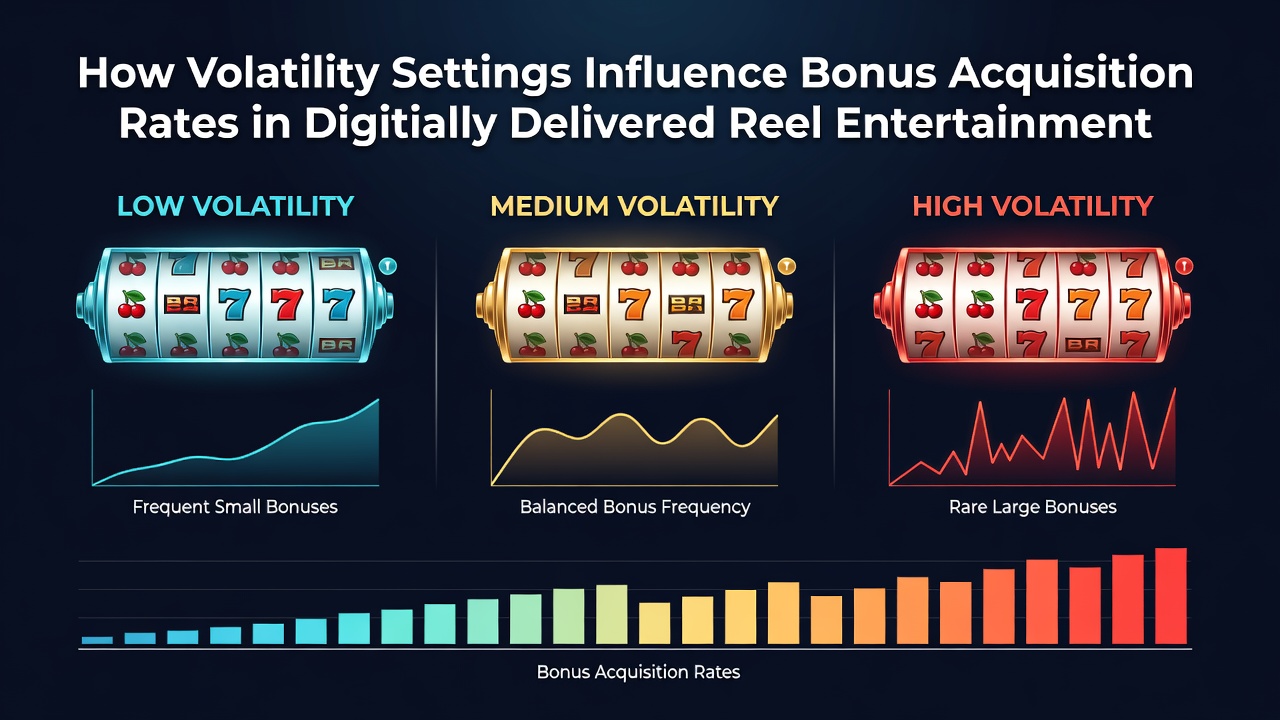
Volatility settings determine how often bonus features activate in digitally delivered reel entertainment, and developers adjust these parameters to balance player engagement with mathematical return models. Data from gaming laboratories shows that higher volatility configurations reduce the frequency of bonus acquisitions while increasing teh potential size of rewards when triggers occur, whereas lower volatility options produce more consistent bonus appearances with smaller average payouts. Researchers at institutions studying random number generators have documented these patterns across thousands of simulated spins, confirming that volatility acts as the primary control for bonus hit rates rather than RTP alone.
Defining Volatility in Reel Game Mechanics
Volatility refers to the degree of variation in outcomes over a given number of plays, and it directly influences how bonus rounds distribute across sessions. Game providers set volatility through weighted symbol distributions and trigger probabilities, which dictate whether players encounter frequent small bonuses or infrequent large ones. Studies from the University of Nevada, Las Vegas gaming research program indicate that these settings remain independent of RTP percentages, allowing operators to fine-tune acquisition rates without altering overall payout ratios. In August 2026, platform updates from multiple studios incorporated refined volatility sliders that let players preview approximate bonus frequencies before committing funds, reflecting broader industry efforts to increase transparency around trigger mechanics.
How High Volatility Affects Bonus Acquisition
High volatility reels require more spins on average before bonus features activate, and this extended interval stems from lower base trigger probabilities embedded in the random number generator. Providers achieve these profiles by concentrating high-value symbols and bonus icons into narrower outcome bands, which means players experience longer dry spells interrupted by substantial rewards. Figures released by Gaming Laboratories International reveal that titles operating in the upper volatility tier often post bonus hit rates between 1 in 200 and 1 in 300 spins, depending on the specific feature structure. Observers note that this configuration suits players who prefer extended sessions with the potential for larger accumulated wins once the bonus round finally lands.
Low Volatility Patterns and Frequent Triggers
Low volatility configurations increase bonus acquisition rates by raising the probability of landing required symbol combinations on each spin. Developers spread bonus icons more evenly across the reel strips and reduce the number of symbols needed to initiate features, resulting in more regular appearances of free spins, pick games, or multipliers. Research compiled by the Canadian Gaming Association demonstrates that low volatility titles typically achieve bonus triggers every 80 to 120 spins on average, creating steadier engagement curves across shorter play periods. Those who have analyzed session data across multiple operators find that this approach maintains player attention through repeated small-scale rewards rather than relying on rare high-impact events.
Mathematical Models Behind Trigger Rates
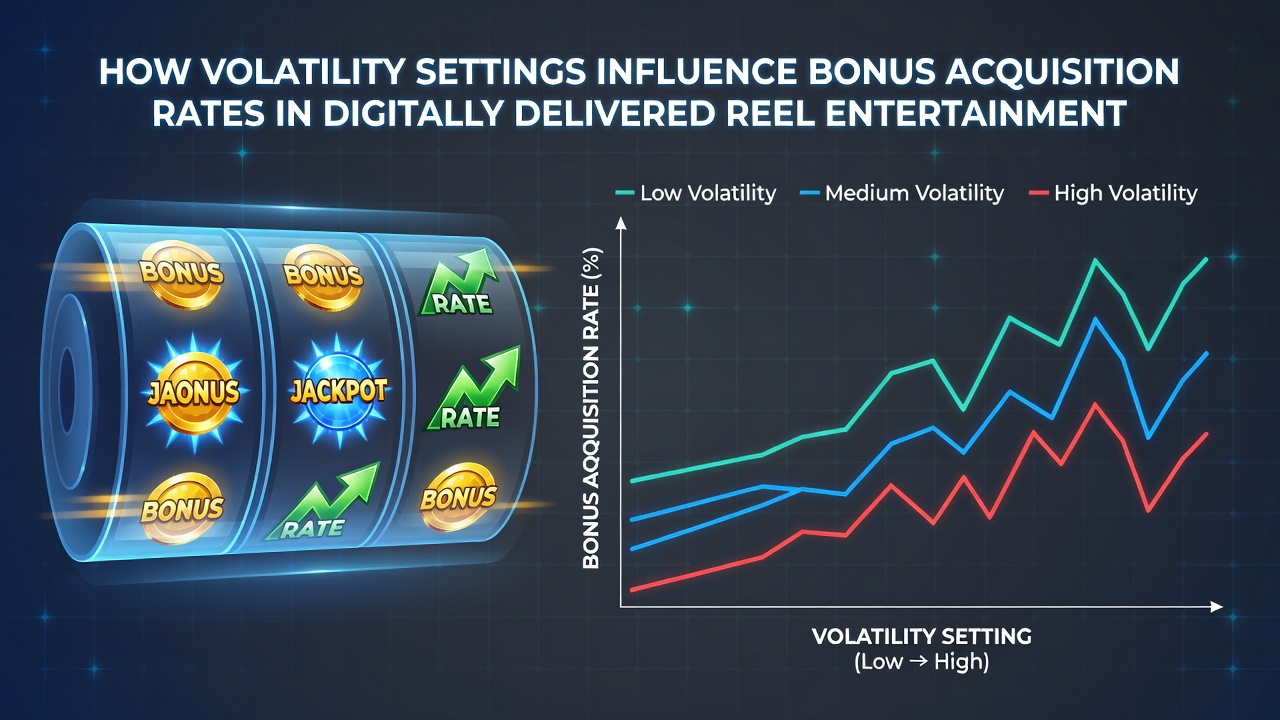
Engineers calculate bonus acquisition rates using probability trees that account for every possible reel outcome, and volatility settings serve as the multiplier applied to these base probabilities. When volatility rises, the model compresses successful trigger paths into fewer combinations, which lengthens the expected interval between bonuses. A 2025 technical paper from the Technical University of Munich's gaming simulation lab outlined how adjustments to symbol weighting alone can shift bonus frequency by factors of three or four without changing the underlying RTP. Operators apply these models during certification testing to ensure advertised acquisition ranges match actual performance across large sample sizes.
Player Session Data and Observed Trends
Session tracking across major platforms shows clear correlations between chosen volatility levels and the number of bonus features completed per hour. Players who select high volatility options complete fewer bonuses overall but record higher average values per completed round, while those favoring low volatility settings finish more features with correspondingly smaller individual returns. Aggregated reports from the European Gaming and Betting Association confirm that these patterns hold steady across thousands of accounts, independent of game theme or visual presentation. In practice, the data underscores that volatility functions as the dominant variable controlling bonus cadence once RTP and hit frequency parameters are fixed.
Conclusion
Volatility settings remain the central mechanism through which developers control bonus acquisition rates in digitally delivered reel entertainment. High volatility profiles extend intervals between triggers while amplifying reward size, and low volatility options compress those intervals to produce steadier feature appearances. Research from independent laboratories and academic programs continues to map these relationships with increasing precision, providing operators and players with clearer expectations around session outcomes. As platforms evolve through 2026 and beyond, volatility calibration will continue to shape how bonus mechanics distribute across player experiences.